When I was asked if I wanted to be part of a project with The Guardian newspaper on Black Lives Matter, I was overjoyed. With big issues like this, there are some things you have to say yes to and ask questions later. Now, I have found The Guardian to be one of the voices of reason, even dating back to their stories of the Edward Snowden leak in 2013/2014 as well as the September 11 attacks (9/11), nearly twenty years ago in 2001. Speaking with journalists Aamna Modhin and Lucy Campell, this was the very first time I felt good(ish) about national journalism. Not unfamiliar with local press, including The Nenequirer, NQ is ethical and run by local people.
I have often been more cynical of national papers because they don’t always know the communities they write about (on an experiential level). However, being interviewed by Aamna, a Black British female reporter, she gave me some comfort that the ominous “they” [The Guardian] were on the right side of this. I would not have committed to this project if I did not believe The Guardian would do it justice. This is part of the movement; this is part of Black British history and I was very proud to be included in the narrative.
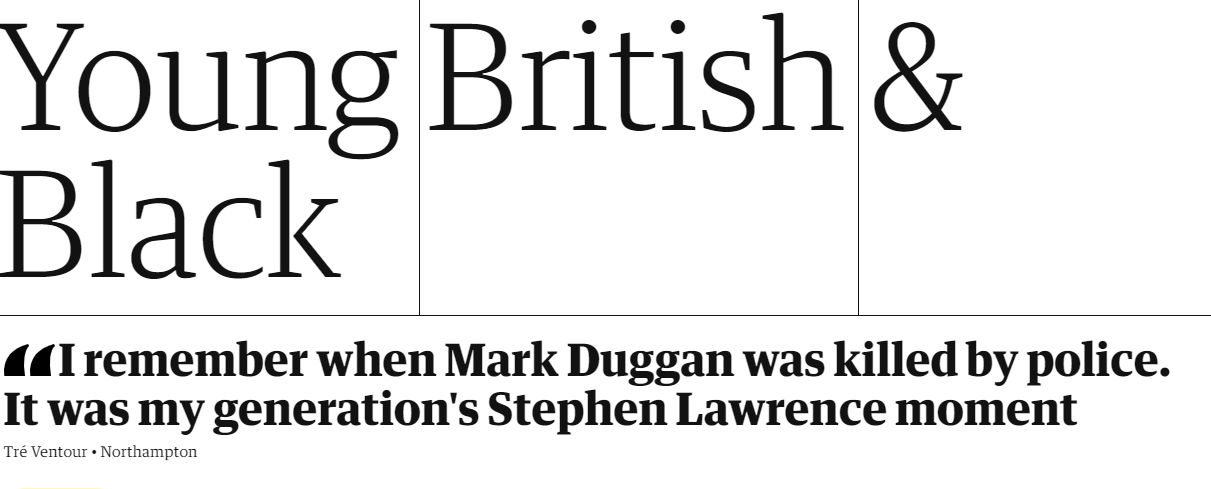
What I have decided to call ’50 Black Britons’ is a story by The Guardian with fifty different Black British perspectives about racism in the United Kingdom – from London to Liverpool; from all the way to the Shetland Islands to Scotland; from the Forest of Dean to Buckingham, Northampton and the Black Country. These are fifty stories told by the next generation coming through. It features two news articles and a podcast – very much a part of the Black Lives Matter movements and anti-racist struggle in Britain and elsewhere.